 Gabriel Landi
– Affiliation: University of Rochester
– Short Bio: Gabriel T. Landi is a theoretical physicist and associate
professor in the Department of Physics and Astronomy at the
University of Rochester. His work lives at the intersection of open
quantum systems and quantum thermodynamics, where he
studies how irreversibility, noise, and quantum coherence set the
ultimate limits of energy conversion, transport, and metrology in
microscopic devices. After earning a PhD from the University of
São Paulo, he held faculty positions at UFABC and later at the
University of São Paulo before moving to Rochester in 2022. He
also serves as an associate editor for PRX Quantum and leads the
QT² group, which focuses on non-equilibrium quantum
thermodynamics and quantum transport.
 Gonzalo Paule Manzano
– Affiliation: Campus Universitat de les Illes Balears
– Short Bio: Gonzalo Manzano Paule is a theoretical physicist at
IFISC (CSIC–UIB) in Mallorca, where he is a tenured researcher
with a track record built across several of Europe’s major theory
hubs. He earned his PhD in Physics at Universidad Complutense
de Madrid, then held postdoctoral positions at ICTP Trieste and
Scuola Normale Superiore (Pisa), followed by an ESQ postdoc at
IQOQI Vienna, before returning to IFISC via Spain’s Juan de la
Cierva and Ramón y Cajal programs. His research centers on
quantum and stochastic thermodynamics—especially the role of
information, fluctuations, and complexity—and lately he has
pushed these tools and concepts to study collective effects in
many-body physics and the thermodynamics of complex
systems.
 Stephen Clark
– Affiliation: University of Bristol
– Short Bio: Stephen R. Clark is a professor of theoretical physics
at the University of Bristol. He is known for tackling the quantum
many-body problem in regimes where equilibrium politely leaves
the room—ranging from ultracold atoms to strongly correlated
materials. A major thread of his pioneering work is the
development of tensor-network methods such as DMRG and
TEBD to simulate entanglement and dynamics in large quantum
systems, along with building high-performance open-source
tools that help make these techniques broadly usable. His
research sits in the sweet spot where deep theory meets
computational craft: understanding what complex quantum
matter can do, and what we can realistically calculate about it.
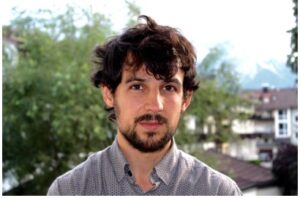 Martí Perarnau-Llobet
– Affiliation: Universidad Autonoma de Barcelona
– Short Bio: Martí Perarnau-Llobet is a theoretical
physicist at the Universitat Autònoma de Barcelona,
where he holds a Ramón y Cajal position in the UAB
Quantum Information Group. His work explores how
thermodynamics and information theory change once
quantum effects and environmental noise become
unavoidable—exactly the regime relevant to emerging
quantum technologies. In 2024 he received the RSEF–
Fundación BBVA Young Researcher Award in
Theoretical Physics, recognizing contributions that
connect quantum information with quantum and
stochastic thermodynamics, including how to optimize
and control open quantum systems for tasks like energy-efficient information processing and
precision measurement.
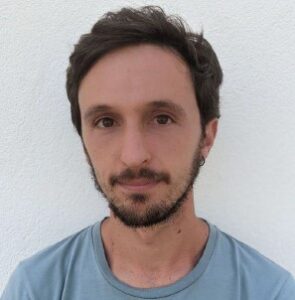 Paolo Erdman
– Affiliation: Kipu
– Short Bio: Paolo Erdman is a theoretical physicist currently
working at the quantum start-up company KIPU. He earned
his PhD at Scuola Normale Superiore di Pisa, studying chargeand-
heat dynamics in nanostructures and driven quantum
thermal machines, then moved to Freie Universität Berlin’s
AI4Science ecosystem—first as a postdoc and later as an
independent researcher after winning a Math+ project. During
these years he built a world-leading expertise in open
quantum systems and machine-learning, successfully
managing to apply them to find optimal control and design of
open quantum system, with applications spanning quantum
thermal machines, quantum batteries, and the design of
quantum probes for metrology.